
Source: www.MNNonline.org
Date: August 31, 2026

Kenya (MNN) — Christianity is fairly normal in most parts of Kenya, but in the Northeast, Gospel workers risk their lives for the unreached.
Patrick Anthony with FMI says that while it is not uncommon to hear worship music blaring from small sanctuaries in central Kenya, Christians have to live much more discreetly in the communities of the Northeast, where the majority of people are Somali and roughly 99 percent of the population is Muslim.
Neighboring Somalia and Somaliland are some of the most challenging places to reach with the Gospel. Open Doors International ranked Somalia as the second-most dangerous country for Christians to live in. One Christian convert in Somaliland was poisoned to death by his own family.
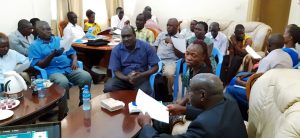
FMI in Kenya. (Image courtesy of FMI)
Anthony says that, as a result, evangelism efforts need to be more measured and intentional.
“Gospel work is slow, and it’s really based on relationships,” Anthony says. “Somali culture highly values honor, hospitality, clan relationships, oral storytelling, and poetry. They want to know and have confidence in a person’s character before they will really listen to that person’s message.”
One of the best ways the church can reach these communities is by caring for their physical needs through food assistance, healthcare, and job development.
“When the church cares about those things, that really helps to open up doors, even in a hard community,” Anthony says.
FMI’s Gospel partners in these communities share the Bible as a story to match the oral culture. They rely on audio Bibles and devotionals for children.
“[The devotionals are] written and shared with the acknowledgement that when a kid’s listening to this, parents are hearing this. They’ll hear devotions, they’ll hear the scriptures.”
Counting the cost

Representative image courtesy of Balazs Simon on Pexels
Working in these communities is dangerous. Anthony relates the story of one brother in Christ who is valiantly ministering in Northeast Kenya.
“His church was attacked some years ago, and a number of his people, including his wife, were shot and killed by terrorists. And yet they decided as a church that they would continue to pray and continue to serve until the Lord would tell them clearly to move elsewhere,” Anthony says.
“They know the costs people can pay in those kinds of areas, and they still diligently, daily go about their lives and work, ministering to those who may turn around and attack them.”
Pray for the safety of Kenyan pastors. To help them in their work, FMI has leadership training planned for early next year. Pray that these Christian leaders would come to know the story of the Bible deeply so they can better share the Good News.
Header image is a representative photo of people in Kenya, courtesy of Gary M. Cohen on Pexels