
Source: www.morningstarnews.org
Date: July 21, 2026
Father survived by five children ages 17 to 4.
By Our East Africa Correspondent - Leave a Comment
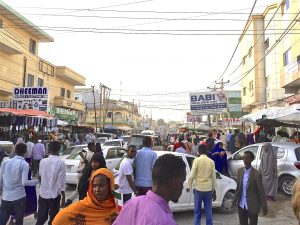
Street in Hargeisa, capital of Somaliland. Clay Gilliland, Creative Commons
NAIROBI, Kenya (Morning Star News) – Muslim relatives of a father of five in Somaliland who recently became a Christian poisoned him to death this month for converting, sources said.
Sharif Ali came to faith in Christ in April in an undisclosed town in Somaliland, a partially recognized state bordered by Somalia on the east, Djibouti to the northwest and Ethiopia to the south and west. He was 42.
He was poisoned on July 5 and died on July 7, sources said.
Area underground Christians said Ali’s family became suspicious of his secret faith after noticing he regularly hosted visitors in his home and missed Friday mosque prayers. Relatives invited him to a family gathering on July 5 where they questioned him about these observations and told him that neighbors had heard Christian songs in his home, the local sources said.
Ali chose not to respond to the accusations, remaining silent throughout the questioning, a Christian leader said.
After the family shared a meal, he returned home, and later that night, he became seriously ill, experiencing severe vomiting and diarrhea, the leader said. His wife took him to a hospital.
At the hospital, Ali told a visiting underground church leader, “Please come closer to me – I do not want to speak loudly. I regret not openly confessing my faith in Issa [Jesus] as my personal Savior. If I die, I rejoice because I have believed in Issa.”
He died two days later on July 7, area Christians said. He is survived by his wife and children ages 17, 14, 9, 6 and 4.
Ali had put his faith in Christ after a period of spiritual searching and encounter with underground Christians. As is customary for all Christians in Somaliland, where leaving Islam is punishable by death, he kept his faith secret.
Local Christians said he often spoke against hostility toward Christians and urged others to treat them with dignity. They said Ali would frequently remind people, “Christians are not bad people. Some Christians from overseas have been assisting our people. If some of our people become friends with them, let us not mistreat or hate them.”
They remembered him as a compassionate community leader whose quiet support for Christians left a lasting impression on many. He quietly demonstrated his belief through kindness, hospitality and practical support for underground Christians.
Ali regularly welcomed underground believers into his home despite the personal risks involved, they said, sharing meals with them, offering encouragement and providing practical assistance when possible.
“His home became a place where Christians could experience friendship and hospitality in an environment where many lived in fear of rejection and persecution,” one Christian said.
A Christian leader noted, “We respect his quiet faith in Jesus and his life of sacrificial service. We received many gifts from him and experienced his generous hospitality. May he rest in peace with the living God through our Lord Jesus Christ.”
Members of his underground fellowship said they continue to pray for his family and for Christians across Somalia who quietly practice their faith despite significant social pressures and persecution.
Somaliland’s constitution designates Islam as the state religion and establishes sharia (Islamic law) as a foundational source of legislation, and under the traditional jurisprudence in the area, apostasy is punishable by death.
Somalia has not recognized the independence of Somaliland and regards it as one of its federal member states. Somalia ranked No. 2 on Christian support group Open Doors’ 2026 World Watch List of the 50 countries where it is most difficult to be a Christian. The country’s constitution establishes Islam as the state religion and prohibits the propagation of any other religion, according to the U.S. State Department. It also requires that laws comply with sharia (Islamic law) principles, with no exceptions in application for non-Muslims.
The death penalty for apostasy is part of Islamic law according to mainstream schools of Islamic jurisprudence. An Islamic extremist group in Somalia, Al Shabaab, is allied with Al Qaeda and adheres to the teaching.
Converts from Islam face significant social pressure, family conflict and isolation, and human rights organizations have frequently highlighted these concerns.